







Quick Start Guide to Ffmpeg: Learn to Use the Open Source Multimedia-Processing Tool Like a Pro
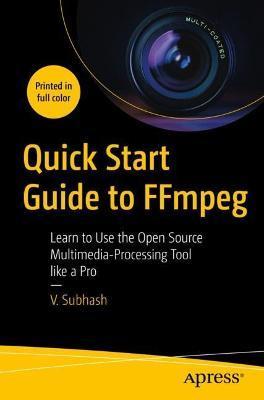
Quick Start Guide to Ffmpeg: Learn to Use the Open Source Multimedia-Processing Tool Like a Pro
Create, edit, modify and convert multimedia files using FFmpeg, the most versatile open source audio and video processing tool available for Linux, Mac and Windows users. After reading this book, you will be able to work with video and audio files, images, text, animations, fonts, subtitles and metadata like a pro. It begins with a simple introduction to FFmpeg executables -- ffmpeg, ffprobe and ffplay, and explains how you can use them to process multimedia containers, streams, audio channels, maps and metadata. It then describes how you can easily edit, enhance and convert audio, video, image and text files. There are dedicated chapters for filters, audio, subtitles and metadata, as well as FFmpeg tips and tricks. Sample lists of FFmpeg filters, encoders, decoders, formats and codecs are also available as appendices. Quick Start Guide to FFmpeg is for anyone who needs to edit or process multimedia files including studio professionals, broadcast personnel, content creators, podcasters, librarians, archivists and webmasters. It will be indispensable for those wanting to process a variety of multimedia files from the command line and inside shell scripts or custom-built software. You Will Learn To: Convert from one format to another e.g. video-to-video, video-to-audio, video-to-image, image-to-video, video-to-animation, animation-to-video, text-to-audio, text-to-videoEdit video files by cutting them with and without re-encoding, appending, resizing, changing frame rate and aspect ratio, mixing in audioUse filters to rotate, flip, crop, overlay (side-by-side or inset), remove logos, blur, smooth and sharpen, apply transitions as well as speed up or down playbackEdit audio files by changing, normalizing or compressing volume, mixing and splitting channels and detecting silence. Also, learn to generate waveforms as video or imagesAdd subtitles, place them anywhere on the screen, use custom fonts and colors, and use different languagesLearn how to import, export and remove metadata, add MP3 tags (including album art), set global and stream-specific metadata, export and remove metadata
This Book For:
Content creators and bloggers from professional studio employees to Youtubers and hobbyists who need to process their own multimedia content; multimedia archivists and librarians; regular Linux desktop users
PRP: 407.92 Lei
Acesta este Prețul Recomandat de Producător. Prețul de vânzare al produsului este afișat mai jos.
367.13Lei
367.13Lei
407.92 LeiPrimești 367 puncte
Livrare in 2-4 saptamani
Descrierea produsului
Create, edit, modify and convert multimedia files using FFmpeg, the most versatile open source audio and video processing tool available for Linux, Mac and Windows users. After reading this book, you will be able to work with video and audio files, images, text, animations, fonts, subtitles and metadata like a pro. It begins with a simple introduction to FFmpeg executables -- ffmpeg, ffprobe and ffplay, and explains how you can use them to process multimedia containers, streams, audio channels, maps and metadata. It then describes how you can easily edit, enhance and convert audio, video, image and text files. There are dedicated chapters for filters, audio, subtitles and metadata, as well as FFmpeg tips and tricks. Sample lists of FFmpeg filters, encoders, decoders, formats and codecs are also available as appendices. Quick Start Guide to FFmpeg is for anyone who needs to edit or process multimedia files including studio professionals, broadcast personnel, content creators, podcasters, librarians, archivists and webmasters. It will be indispensable for those wanting to process a variety of multimedia files from the command line and inside shell scripts or custom-built software. You Will Learn To: Convert from one format to another e.g. video-to-video, video-to-audio, video-to-image, image-to-video, video-to-animation, animation-to-video, text-to-audio, text-to-videoEdit video files by cutting them with and without re-encoding, appending, resizing, changing frame rate and aspect ratio, mixing in audioUse filters to rotate, flip, crop, overlay (side-by-side or inset), remove logos, blur, smooth and sharpen, apply transitions as well as speed up or down playbackEdit audio files by changing, normalizing or compressing volume, mixing and splitting channels and detecting silence. Also, learn to generate waveforms as video or imagesAdd subtitles, place them anywhere on the screen, use custom fonts and colors, and use different languagesLearn how to import, export and remove metadata, add MP3 tags (including album art), set global and stream-specific metadata, export and remove metadata
This Book For:
Content creators and bloggers from professional studio employees to Youtubers and hobbyists who need to process their own multimedia content; multimedia archivists and librarians; regular Linux desktop users
Detaliile produsului



