







Philosophy of Language
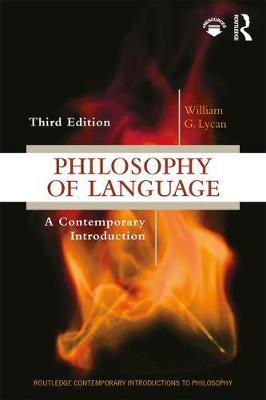
Philosophy of Language
Now in its third edition, Philosophy of Language: A Contemporary Introduction introduces students to the main issues and theories in twenty-first-century philosophy of language, focusing specifically on linguistic phenomena. Author William G. Lycan structures the book into four general parts. Part I, Reference and Referring, includes topics such as Russell's Theory of Descriptions (and its objections), Donnellan's distinction, problems of anaphora, the Description Theory of proper names, Searle's Cluster Theory, and the Causal-Historical Theory. Part II, Theories of Meaning, surveys the competing theories of linguistic meaning and compares their various advantages and liabilities. Part III, Pragmatics and Speech Acts, introduces the basic concepts of linguistic pragmatics and includes a detailed discussion of the problem of indirect force. Part IV, The Expressive and the Figurative, examines various forms of expressive language and what "metaphorical meaning" is and how most listeners readily grasp it.
Features of Philosophy of Language include:
chapter overviews and summaries;
clear supportive examples;
study questions;
annotated lists of further reading;
a glossary.
Updates to the third edition include:
Features of Philosophy of Language include:
chapter overviews and summaries;
clear supportive examples;
study questions;
annotated lists of further reading;
a glossary.
Updates to the third edition include:
PRP: 483.51 Lei
Acesta este Prețul Recomandat de Producător. Prețul de vânzare al produsului este afișat mai jos.
435.16Lei
435.16Lei
483.51 LeiPrimești 435 puncte
Livrare in 2-4 saptamani
Descrierea produsului
Now in its third edition, Philosophy of Language: A Contemporary Introduction introduces students to the main issues and theories in twenty-first-century philosophy of language, focusing specifically on linguistic phenomena. Author William G. Lycan structures the book into four general parts. Part I, Reference and Referring, includes topics such as Russell's Theory of Descriptions (and its objections), Donnellan's distinction, problems of anaphora, the Description Theory of proper names, Searle's Cluster Theory, and the Causal-Historical Theory. Part II, Theories of Meaning, surveys the competing theories of linguistic meaning and compares their various advantages and liabilities. Part III, Pragmatics and Speech Acts, introduces the basic concepts of linguistic pragmatics and includes a detailed discussion of the problem of indirect force. Part IV, The Expressive and the Figurative, examines various forms of expressive language and what "metaphorical meaning" is and how most listeners readily grasp it.
Features of Philosophy of Language include:
chapter overviews and summaries;
clear supportive examples;
study questions;
annotated lists of further reading;
a glossary.
Updates to the third edition include:
Features of Philosophy of Language include:
chapter overviews and summaries;
clear supportive examples;
study questions;
annotated lists of further reading;
a glossary.
Updates to the third edition include:
Detaliile produsului



