







Odysseus Found: A Royal Tomb, a Hero Cult, and the Birth of a Legend
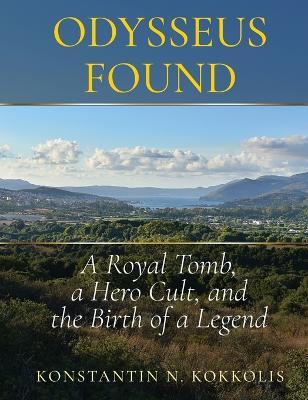
Odysseus Found: A Royal Tomb, a Hero Cult, and the Birth of a Legend
Was there ever an Ithaca or even an Odysseus? This question has been posed for over two millennia. The author believes yes, there was an Odysseus, but "Ithaca" as a place name has likely been misinterpreted. The author did not find the royal tomb by reading Homer's geographical descriptions. The author discovered the tomb by understanding the allegories in The Odyssey that most people overlook.
In this book, the author takes the reader on a journey that begins with his recent discovery of a Bronze Age solar cult center in Kefalonia, Greece.
Existing research on the Bronze Age follows, which includes a synthesis of the current archaeological record, comparative mythology, and archaeoastronomy. The author reinterprets the design of a nearby Bronze Age cemetery as functioning as a solar calendar, Minoan glyptic art is also reinterpreted, and the solar and lunar allegories of The Odyssey are described. The author then draws comparisons between The Odyssey and the region of Kokolata-Livatho in Kefalonia.
Using planetary software (Stellarium) that shows the solar and lunar cycles of the Bronze Age, the sun and moon pointed the way and led the author two kilometers from the solar cult center he previously discovered. That is how the author found the royal tomb.
The Odyssey before Homer began as a solar hero cult that worshipped a past leader at a specific location in Kefalonia. That leader, Odysseus, cleverly had his tomb built at a unique site to become one with the sun: an immortal solar hero. The ritual evolved into a local myth, eventually spread throughout Greece, and centuries later, a talented bard told his version of the timeless epic we know today as The Odyssey.
Includes over 50 illustrations, 38 of which are in color: constellation simulations and landscape photos, as well as the newly discovered sites and the throne at the solar cult center.
Konstantin N. Kokkolis is a resident of Kefalonia, Greece. He studied Urban Planning, minored in Classics at Rutgers University, and graduated from Temple University Law School. Decades later, the classes he took in comparative mythology, archaeology, ancient Greek history, and Greek and Roman Art helped him to solve one of history's greatest mysteries.
PRP: 235.60 Lei
Acesta este Prețul Recomandat de Producător. Prețul de vânzare al produsului este afișat mai jos.
212.04Lei
212.04Lei
235.60 LeiPrimești 212 puncte
Indisponibil
Descrierea produsului
Was there ever an Ithaca or even an Odysseus? This question has been posed for over two millennia. The author believes yes, there was an Odysseus, but "Ithaca" as a place name has likely been misinterpreted. The author did not find the royal tomb by reading Homer's geographical descriptions. The author discovered the tomb by understanding the allegories in The Odyssey that most people overlook.
In this book, the author takes the reader on a journey that begins with his recent discovery of a Bronze Age solar cult center in Kefalonia, Greece.
Existing research on the Bronze Age follows, which includes a synthesis of the current archaeological record, comparative mythology, and archaeoastronomy. The author reinterprets the design of a nearby Bronze Age cemetery as functioning as a solar calendar, Minoan glyptic art is also reinterpreted, and the solar and lunar allegories of The Odyssey are described. The author then draws comparisons between The Odyssey and the region of Kokolata-Livatho in Kefalonia.
Using planetary software (Stellarium) that shows the solar and lunar cycles of the Bronze Age, the sun and moon pointed the way and led the author two kilometers from the solar cult center he previously discovered. That is how the author found the royal tomb.
The Odyssey before Homer began as a solar hero cult that worshipped a past leader at a specific location in Kefalonia. That leader, Odysseus, cleverly had his tomb built at a unique site to become one with the sun: an immortal solar hero. The ritual evolved into a local myth, eventually spread throughout Greece, and centuries later, a talented bard told his version of the timeless epic we know today as The Odyssey.
Includes over 50 illustrations, 38 of which are in color: constellation simulations and landscape photos, as well as the newly discovered sites and the throne at the solar cult center.
Konstantin N. Kokkolis is a resident of Kefalonia, Greece. He studied Urban Planning, minored in Classics at Rutgers University, and graduated from Temple University Law School. Decades later, the classes he took in comparative mythology, archaeology, ancient Greek history, and Greek and Roman Art helped him to solve one of history's greatest mysteries.
Detaliile produsului



