







News After Trump: Journalism's Crisis of Relevance in a Changed Media Culture
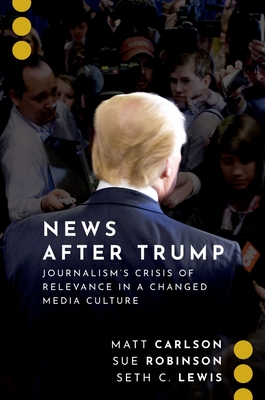
News After Trump: Journalism's Crisis of Relevance in a Changed Media Culture
Donald Trump might have been the loudest and most powerful voice maligning the integrity of news media in a generation, but his unrelenting attacks draw from a stew of resentment, wariness, cynicism, and even hatred toward the press that has been simmering for years. At one time, journalism's
centrality in reporting and interpreting important events was relatively unquestioned when a limited number of channels and voices produced a consensus-based news environment. The collapse of this environment has sparked a moment of reckoning within and outside journalism, particularly as
professional news outlets struggle to remain solvent. Alternative voices compete for attention with and criticize the work and motivations of journalists, even as a growing number of journalists question their core norms and practices. News After Trump considers these struggles over journalism to be about the very relevance of journalism as an institutional form of knowledge production. At the heart of this questioning is a struggle to define what truthful accounts look like and who ought to create them or determine them in a
rapidly changing media culture. Through an extensive accounting of Trump's relationship with the press, and drawing on in-depth interviews with journalists and textual analysis of news events, editorials, social media, and trade-press discussions, the book rethinks the relevance of journalism by
recognizing the limits of objectivity and the way in which journalism positions certain actors as authority figures while rendering the less socially powerful invisible or flawed. This ethos of detachment has staved off vital questions about how journalism connects to its audiences, how it creates
enduring value in people's lives (or not), and how diversity needs to be understood jointly at the level of production, reporting, and audience in order to rebuild trust.
PRP: 343.49 Lei
Acesta este Prețul Recomandat de Producător. Prețul de vânzare al produsului este afișat mai jos.
309.14Lei
309.14Lei
343.49 LeiPrimești 309 puncte
Indisponibil
Descrierea produsului
Donald Trump might have been the loudest and most powerful voice maligning the integrity of news media in a generation, but his unrelenting attacks draw from a stew of resentment, wariness, cynicism, and even hatred toward the press that has been simmering for years. At one time, journalism's
centrality in reporting and interpreting important events was relatively unquestioned when a limited number of channels and voices produced a consensus-based news environment. The collapse of this environment has sparked a moment of reckoning within and outside journalism, particularly as
professional news outlets struggle to remain solvent. Alternative voices compete for attention with and criticize the work and motivations of journalists, even as a growing number of journalists question their core norms and practices. News After Trump considers these struggles over journalism to be about the very relevance of journalism as an institutional form of knowledge production. At the heart of this questioning is a struggle to define what truthful accounts look like and who ought to create them or determine them in a
rapidly changing media culture. Through an extensive accounting of Trump's relationship with the press, and drawing on in-depth interviews with journalists and textual analysis of news events, editorials, social media, and trade-press discussions, the book rethinks the relevance of journalism by
recognizing the limits of objectivity and the way in which journalism positions certain actors as authority figures while rendering the less socially powerful invisible or flawed. This ethos of detachment has staved off vital questions about how journalism connects to its audiences, how it creates
enduring value in people's lives (or not), and how diversity needs to be understood jointly at the level of production, reporting, and audience in order to rebuild trust.
Detaliile produsului



