







Linux Kernel Programming Part 2 - Char Device Drivers and Kernel Synchronization: Create user-kernel interfaces, work with peripheral I/O, and handle
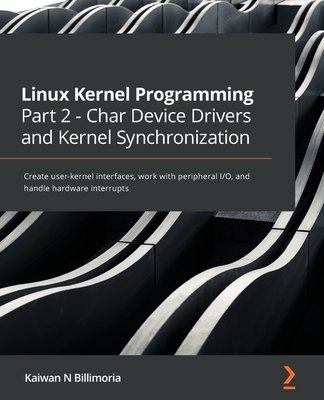
Linux Kernel Programming Part 2 - Char Device Drivers and Kernel Synchronization: Create user-kernel interfaces, work with peripheral I/O, and handle
Discover how to write high-quality character driver code, interface with userspace, work with chip memory, and gain an in-depth understanding of working with hardware interrupts and kernel synchronization
Key Features: Delve into hardware interrupt handling, threaded IRQs, tasklets, softirqs, and understand which to use whenExplore powerful techniques to perform user-kernel interfacing, peripheral I/O and use kernel mechanismsWork with key kernel synchronization primitives to solve kernel concurrency issues
Book Description: Linux Kernel Programming Part 2 - Char Device Drivers and Kernel Synchronization is an ideal companion guide to the Linux Kernel Programming book. This book provides a comprehensive introduction for those new to Linux device driver development and will have you up and running with writing misc class character device driver code (on the 5.4 LTS Linux kernel) in next to no time.
You'll begin by learning how to write a simple and complete misc class character driver before interfacing your driver with user-mode processes via procfs, sysfs, debugfs, netlink sockets, and ioctl. You'll then find out how to work with hardware I/O memory. The book covers working with hardware interrupts in depth and helps you understand interrupt request (IRQ) allocation, threaded IRQ handlers, tasklets, and softirqs. You'll also explore the practical usage of useful kernel mechanisms, setting up delays, timers, kernel threads, and workqueues. Finally, you'll discover how to deal with the complexity of kernel synchronization with locking technologies (mutexes, spinlocks, and atomic/refcount operators), including more advanced topics such as cache effects, a primer on lock-free techniques, deadlock avoidance (with lockdep), and kernel lock debugging techniques.
By the end of this Linux kernel book, you'll have learned the fundamentals of writing Linux character device driver code for real-world projects and products.
What You Will Learn: Get to grips with the basics of the modern Linux Device Model (LDM)Write a simple yet complete misc class character device driverPerform user-kernel interfacing using popular methodsUnderstand and handle hardware interrupts confidentlyPerform I/O on peripheral hardware chip memoryExplore kernel APIs to work with delays, timers, kthreads, and workqueuesUnderstand kernel concurrency issuesWork with key kernel synchronization primitives and discover how to detect and avoid deadlock
Who this book is for: An un
322.32Lei
322.32Lei
Primești 322 puncte
Livrare in 2-4 saptamani
Descrierea produsului
Discover how to write high-quality character driver code, interface with userspace, work with chip memory, and gain an in-depth understanding of working with hardware interrupts and kernel synchronization
Key Features: Delve into hardware interrupt handling, threaded IRQs, tasklets, softirqs, and understand which to use whenExplore powerful techniques to perform user-kernel interfacing, peripheral I/O and use kernel mechanismsWork with key kernel synchronization primitives to solve kernel concurrency issues
Book Description: Linux Kernel Programming Part 2 - Char Device Drivers and Kernel Synchronization is an ideal companion guide to the Linux Kernel Programming book. This book provides a comprehensive introduction for those new to Linux device driver development and will have you up and running with writing misc class character device driver code (on the 5.4 LTS Linux kernel) in next to no time.
You'll begin by learning how to write a simple and complete misc class character driver before interfacing your driver with user-mode processes via procfs, sysfs, debugfs, netlink sockets, and ioctl. You'll then find out how to work with hardware I/O memory. The book covers working with hardware interrupts in depth and helps you understand interrupt request (IRQ) allocation, threaded IRQ handlers, tasklets, and softirqs. You'll also explore the practical usage of useful kernel mechanisms, setting up delays, timers, kernel threads, and workqueues. Finally, you'll discover how to deal with the complexity of kernel synchronization with locking technologies (mutexes, spinlocks, and atomic/refcount operators), including more advanced topics such as cache effects, a primer on lock-free techniques, deadlock avoidance (with lockdep), and kernel lock debugging techniques.
By the end of this Linux kernel book, you'll have learned the fundamentals of writing Linux character device driver code for real-world projects and products.
What You Will Learn: Get to grips with the basics of the modern Linux Device Model (LDM)Write a simple yet complete misc class character device driverPerform user-kernel interfacing using popular methodsUnderstand and handle hardware interrupts confidentlyPerform I/O on peripheral hardware chip memoryExplore kernel APIs to work with delays, timers, kthreads, and workqueuesUnderstand kernel concurrency issuesWork with key kernel synchronization primitives and discover how to detect and avoid deadlock
Who this book is for: An un
Detaliile produsului



