







Hancock the Superb: The Life and Career of General Winfield Scott Hancock
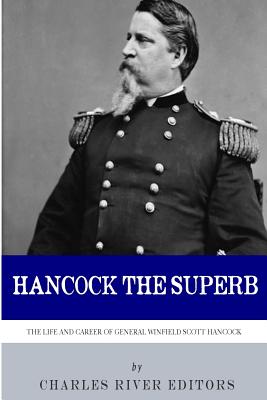
Hancock the Superb: The Life and Career of General Winfield Scott Hancock
*Includes pictures of Hancock and important people, places, and events in his life.
*Includes battle maps of Gettysburg, Antietam, Chancellorsville, Fredericksburg, and more.
*Includes a Bibliography for further reading. "General Hancock is one of the handsomest men in the United States Army. He is tall in stature, robust in figure, with movements of easy dignity...In action...dignity gives way to activity; his features become animated, his voice loud, his eyes are on fire, his blood kindles, and his bearing is that of a man carried away by passion - the character of his bravery" - Regis de Trobriand
Winfield Scott Hancock was an intimidating figure who impressed friends, foes, and fellow generals alike. Known as Hancock the Superb after McClellan described his performance as such during the Battle of Williamsburg in the Peninsula Campaign of 1862, Hancock eventually rose to become the Army of the Potomac's greatest corps commander. Though his reputation and legacy gradually faded over time, Hancock was one of the North's foremost war heroes by the end of the war, and he nearly became president in 1880 when he was just barely defeated by a less decorated Civil War veteran, James Garfield.
Nobody in the Army of the Potomac was in the thick of its biggest battles as often as Hancock and the men he commanded. Hancock superbly led his brigade during the Peninsula Campaign, temporarily commanded a division at Antietam in the center of the lines at the Sunken Lane, and his division was the last to withdraw across the river during the Battle of Chancellorsville.
After the Battle of Chancellorsville, he fortuitously became the new II Corps commander in the Army of the Potomac, just in time to deliver his greatest performance of all. At Gettysburg, Hancock was the commanding general in the field on Day 1, as Meade and the rest of the Union army arrived later that night. On Day 2, Hancock's men assisted Sickles' III Corps when Sickles disobeyed orders and moved it forward, creating a gap in the Union lines. And on Day 3, Hancock's greatest day of the war, he was seriously injured and nearly bled to death while leading his men in their decisive repulse of Pickett's Charge.
Hancock's injury was excruciatingly painful, but he was back in command for the 1864 Overland Campaign, where his men played crucial roles in the Battle of the Wilderness, the Battle of Spotsylvania Court House, and the Battle of Cold Harbor. By the end of the Civil
PRP: 56.11 Lei
Acesta este Prețul Recomandat de Producător. Prețul de vânzare al produsului este afișat mai jos.
50.50Lei
50.50Lei
56.11 LeiPrimești 50 puncte
Indisponibil
Descrierea produsului
*Includes pictures of Hancock and important people, places, and events in his life.
*Includes battle maps of Gettysburg, Antietam, Chancellorsville, Fredericksburg, and more.
*Includes a Bibliography for further reading. "General Hancock is one of the handsomest men in the United States Army. He is tall in stature, robust in figure, with movements of easy dignity...In action...dignity gives way to activity; his features become animated, his voice loud, his eyes are on fire, his blood kindles, and his bearing is that of a man carried away by passion - the character of his bravery" - Regis de Trobriand
Winfield Scott Hancock was an intimidating figure who impressed friends, foes, and fellow generals alike. Known as Hancock the Superb after McClellan described his performance as such during the Battle of Williamsburg in the Peninsula Campaign of 1862, Hancock eventually rose to become the Army of the Potomac's greatest corps commander. Though his reputation and legacy gradually faded over time, Hancock was one of the North's foremost war heroes by the end of the war, and he nearly became president in 1880 when he was just barely defeated by a less decorated Civil War veteran, James Garfield.
Nobody in the Army of the Potomac was in the thick of its biggest battles as often as Hancock and the men he commanded. Hancock superbly led his brigade during the Peninsula Campaign, temporarily commanded a division at Antietam in the center of the lines at the Sunken Lane, and his division was the last to withdraw across the river during the Battle of Chancellorsville.
After the Battle of Chancellorsville, he fortuitously became the new II Corps commander in the Army of the Potomac, just in time to deliver his greatest performance of all. At Gettysburg, Hancock was the commanding general in the field on Day 1, as Meade and the rest of the Union army arrived later that night. On Day 2, Hancock's men assisted Sickles' III Corps when Sickles disobeyed orders and moved it forward, creating a gap in the Union lines. And on Day 3, Hancock's greatest day of the war, he was seriously injured and nearly bled to death while leading his men in their decisive repulse of Pickett's Charge.
Hancock's injury was excruciatingly painful, but he was back in command for the 1864 Overland Campaign, where his men played crucial roles in the Battle of the Wilderness, the Battle of Spotsylvania Court House, and the Battle of Cold Harbor. By the end of the Civil
Detaliile produsului



