







Edmund Burke in America: The Contested Career of the Father of Modern Conservatism
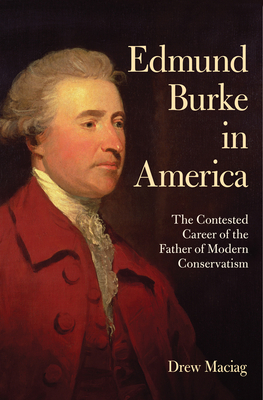
Edmund Burke in America: The Contested Career of the Father of Modern Conservatism
The statesman and political philosopher Edmund Burke (1729-1797) is a touchstone for modern conservatism in the United States, and his name and his writings have been invoked by figures ranging from the arch Federalist George Cabot to the twentieth-century political philosopher Leo Strauss. But Burke's legacy has neither been consistently associated with conservative thought nor has the richness and subtlety of his political vision been fully appreciated by either his American admirers or detractors. In Edmund Burke in America, Drew Maciag traces Burke's reception and reputation in the United States, from the contest of ideas between Burke and Thomas Paine in the Revolutionary period, to the Progressive Era (when Republicans and Democrats alike invoked Burke's wisdom), to his apotheosis within the modern conservative movement.Throughout, Maciag is sensitive to the relationship between American opinions about Burke and the changing circumstances of American life. The dynamic tension between conservative and liberal attitudes in American society surfaced in debates over the French Revolution, Jacksonian democracy, Gilded Age values, Progressive reform, Cold War anticommunism, and post-1960s liberalism. The post-World War II rediscovery of Burke by New Conservatives and their adoption of him as the "father of conservatism" provided an intellectual foundation for the conservative ascendancy of the late twentieth century. Highlighting the Burkean influence on such influential writers as George Bancroft, E. L. Godkin, and Russell Kirk, Maciag also explores the underappreciated impact of Burke's thought on four U.S. presidents: John Adams and John Quincy Adams, Theodore Roosevelt, and Woodrow Wilson. Through close and keen readings of political speeches, public lectures, and works of history and political theory and commentary, Maciag offers a sweeping account of the American political scene over two centuries.
PRP: 154.69 Lei
Acesta este Prețul Recomandat de Producător. Prețul de vânzare al produsului este afișat mai jos.
139.22Lei
139.22Lei
154.69 LeiPrimești 139 puncte
Livrare in 2-4 saptamani
Descrierea produsului
The statesman and political philosopher Edmund Burke (1729-1797) is a touchstone for modern conservatism in the United States, and his name and his writings have been invoked by figures ranging from the arch Federalist George Cabot to the twentieth-century political philosopher Leo Strauss. But Burke's legacy has neither been consistently associated with conservative thought nor has the richness and subtlety of his political vision been fully appreciated by either his American admirers or detractors. In Edmund Burke in America, Drew Maciag traces Burke's reception and reputation in the United States, from the contest of ideas between Burke and Thomas Paine in the Revolutionary period, to the Progressive Era (when Republicans and Democrats alike invoked Burke's wisdom), to his apotheosis within the modern conservative movement.Throughout, Maciag is sensitive to the relationship between American opinions about Burke and the changing circumstances of American life. The dynamic tension between conservative and liberal attitudes in American society surfaced in debates over the French Revolution, Jacksonian democracy, Gilded Age values, Progressive reform, Cold War anticommunism, and post-1960s liberalism. The post-World War II rediscovery of Burke by New Conservatives and their adoption of him as the "father of conservatism" provided an intellectual foundation for the conservative ascendancy of the late twentieth century. Highlighting the Burkean influence on such influential writers as George Bancroft, E. L. Godkin, and Russell Kirk, Maciag also explores the underappreciated impact of Burke's thought on four U.S. presidents: John Adams and John Quincy Adams, Theodore Roosevelt, and Woodrow Wilson. Through close and keen readings of political speeches, public lectures, and works of history and political theory and commentary, Maciag offers a sweeping account of the American political scene over two centuries.
Detaliile produsului



