







Defectors: How the Illicit Flight of Soviet Citizens Built the Borders of the Cold War World
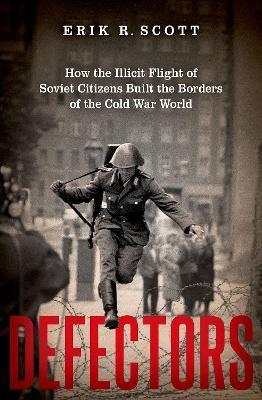
Defectors: How the Illicit Flight of Soviet Citizens Built the Borders of the Cold War World
A broad-ranging history of defectors from the Communist world to the West and how their Cold War treatment shaped present-day restrictions on cross-border movement. Defectors fleeing the Soviet Union seized the world's attention during the Cold War. Their stories were given sensational news coverage and dramatized in spy novels and films. Upon reaching the West, they were entitled to special benefits, including financial assistance and permanent residency. In contrast to other migrants, defectors were pursued by the states they left even as they were eagerly sought by the United States and its allies. Taking part in a risky game that played out across the globe, defectors sought to transcend the limitations of the Cold War world. Defectors follows their treacherous journeys and looks at how their unauthorized flight via land, sea, and air gave shape to a globalized world. It charts a global struggle over defectors that unfolded among rival intelligence agencies operating in the shadows of an occupied Europe, in the forbidden border zones of the USSR, in the disputed straits of the South China Sea, on a hijacked plane 10,000 feet in the air, and around the walls of Soviet embassies. What it reveals is a Cold War world whose borders were far less stable than the notion of an "Iron Curtain" suggests. Surprisingly, the competition for defectors paved the way for collusion between the superpowers, who found common cause in regulating the spaces through which defectors moved. Disputes over defectors mapped out the contours of modern state sovereignty, and defection's ideological framework hardened borders by reinforcing the view that asylum should only be granted to migrants with clear political claims. Although defection all but disappeared after the Cold War, this innovative work shows how it shaped the governance of global borders and helped forge an international refugee system whose legacy and limitations remain with us to this day.
PRP: 252.81 Lei
Acesta este Prețul Recomandat de Producător. Prețul de vânzare al produsului este afișat mai jos.
227.53Lei
227.53Lei
252.81 LeiPrimești 227 puncte
Livrare in 2-4 saptamani
Descrierea produsului
A broad-ranging history of defectors from the Communist world to the West and how their Cold War treatment shaped present-day restrictions on cross-border movement. Defectors fleeing the Soviet Union seized the world's attention during the Cold War. Their stories were given sensational news coverage and dramatized in spy novels and films. Upon reaching the West, they were entitled to special benefits, including financial assistance and permanent residency. In contrast to other migrants, defectors were pursued by the states they left even as they were eagerly sought by the United States and its allies. Taking part in a risky game that played out across the globe, defectors sought to transcend the limitations of the Cold War world. Defectors follows their treacherous journeys and looks at how their unauthorized flight via land, sea, and air gave shape to a globalized world. It charts a global struggle over defectors that unfolded among rival intelligence agencies operating in the shadows of an occupied Europe, in the forbidden border zones of the USSR, in the disputed straits of the South China Sea, on a hijacked plane 10,000 feet in the air, and around the walls of Soviet embassies. What it reveals is a Cold War world whose borders were far less stable than the notion of an "Iron Curtain" suggests. Surprisingly, the competition for defectors paved the way for collusion between the superpowers, who found common cause in regulating the spaces through which defectors moved. Disputes over defectors mapped out the contours of modern state sovereignty, and defection's ideological framework hardened borders by reinforcing the view that asylum should only be granted to migrants with clear political claims. Although defection all but disappeared after the Cold War, this innovative work shows how it shaped the governance of global borders and helped forge an international refugee system whose legacy and limitations remain with us to this day.
Detaliile produsului



