







Cogewea, the Half Blood: A Depiction of the Great Montana Cattle Range
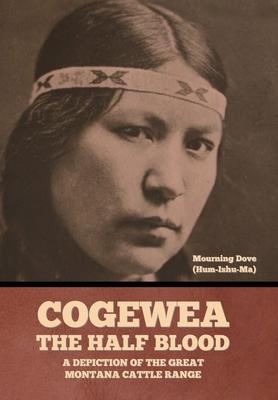
Cogewea, the Half Blood: A Depiction of the Great Montana Cattle Range
Co-ge-we-a, The Half-Blood: A Depiction of the Great Montana Cattle Range is a 1927 Western romance novel by Mourning Dove, also known as Hum-Ishu-Ma, or Christine Quintasket (Okanogan and Arrow Lakes). It is one of the earliest novels written by an indigenous woman from the Plateau region. The novel includes the first example of Native American literary criticism.
Cogewea, the eponymous protagonist, is a woman of mixed-race ancestry, both Indigenous and Euro-American, who feels caught between her two worlds. She works on the ranch of her sister and white brother-in-law in Montana, where she is respected for her talents and skills. A European American from the East, Alfred Densmore, joins the ranch as an inexperienced ranch-hand. Cogewea is torn between the world of her white father and that of her Okanagan (spelled "Okanogan" in the novel) grandmother, Stemteema.
Her work was supported by editor Lucullus Virgil McWhorter, an American anthropologist and activist for Native Americans. He threatened the publishing company, Four Seas Press, in order to get the novel published.
Controversy has developed over McWhorter's influence over and changes in the novel. While some scholars believe his edits were typical for the genre and his time, others consider McWhorter to be a second author of the novel. McWhorter denied having that large a role.
When the book was first published, audiences found the novel's style awkward. Mourning Dove was accused by one US Indian agent of falsely claiming that she written the novel. After receiving McWhorter wrote to him strongly supporting Mourning Dove's authorship, the agent recanted his statements. Over her lifetime, Mourning Dove gained both notoriety and respect as an author. It was not until the late 20th century that Cogewea gained scholarly attention, following a revival of interest in women's and indigenous people's works.
Since that time, scholarship has focused on the infusion in Cogewea of Western tropes with Native American storytelling. In the novel, Alfred Densmore attempts to steal land and money he believes Cogewea possesses (she doesn't), and ends up abusing her when he finds out she is poor. Scholars agree that this plot line is a re-writing of the Silyx Okanagan oral story of Chipmunk and Owl Woman, where Owl Woman is the devourer and Chipmunk barely survives her encounter. Chipmunk is the meaning of Cogewea's name (Okanagan). Jeannette Armstrong, a First Nations woman who claims to be
Cogewea, the eponymous protagonist, is a woman of mixed-race ancestry, both Indigenous and Euro-American, who feels caught between her two worlds. She works on the ranch of her sister and white brother-in-law in Montana, where she is respected for her talents and skills. A European American from the East, Alfred Densmore, joins the ranch as an inexperienced ranch-hand. Cogewea is torn between the world of her white father and that of her Okanagan (spelled "Okanogan" in the novel) grandmother, Stemteema.
Her work was supported by editor Lucullus Virgil McWhorter, an American anthropologist and activist for Native Americans. He threatened the publishing company, Four Seas Press, in order to get the novel published.
Controversy has developed over McWhorter's influence over and changes in the novel. While some scholars believe his edits were typical for the genre and his time, others consider McWhorter to be a second author of the novel. McWhorter denied having that large a role.
When the book was first published, audiences found the novel's style awkward. Mourning Dove was accused by one US Indian agent of falsely claiming that she written the novel. After receiving McWhorter wrote to him strongly supporting Mourning Dove's authorship, the agent recanted his statements. Over her lifetime, Mourning Dove gained both notoriety and respect as an author. It was not until the late 20th century that Cogewea gained scholarly attention, following a revival of interest in women's and indigenous people's works.
Since that time, scholarship has focused on the infusion in Cogewea of Western tropes with Native American storytelling. In the novel, Alfred Densmore attempts to steal land and money he believes Cogewea possesses (she doesn't), and ends up abusing her when he finds out she is poor. Scholars agree that this plot line is a re-writing of the Silyx Okanagan oral story of Chipmunk and Owl Woman, where Owl Woman is the devourer and Chipmunk barely survives her encounter. Chipmunk is the meaning of Cogewea's name (Okanagan). Jeannette Armstrong, a First Nations woman who claims to be
PRP: 264.56 Lei
Acesta este Prețul Recomandat de Producător. Prețul de vânzare al produsului este afișat mai jos.
238.10Lei
238.10Lei
264.56 LeiPrimești 238 puncte
Livrare in 2-4 saptamani
Descrierea produsului
Co-ge-we-a, The Half-Blood: A Depiction of the Great Montana Cattle Range is a 1927 Western romance novel by Mourning Dove, also known as Hum-Ishu-Ma, or Christine Quintasket (Okanogan and Arrow Lakes). It is one of the earliest novels written by an indigenous woman from the Plateau region. The novel includes the first example of Native American literary criticism.
Cogewea, the eponymous protagonist, is a woman of mixed-race ancestry, both Indigenous and Euro-American, who feels caught between her two worlds. She works on the ranch of her sister and white brother-in-law in Montana, where she is respected for her talents and skills. A European American from the East, Alfred Densmore, joins the ranch as an inexperienced ranch-hand. Cogewea is torn between the world of her white father and that of her Okanagan (spelled "Okanogan" in the novel) grandmother, Stemteema.
Her work was supported by editor Lucullus Virgil McWhorter, an American anthropologist and activist for Native Americans. He threatened the publishing company, Four Seas Press, in order to get the novel published.
Controversy has developed over McWhorter's influence over and changes in the novel. While some scholars believe his edits were typical for the genre and his time, others consider McWhorter to be a second author of the novel. McWhorter denied having that large a role.
When the book was first published, audiences found the novel's style awkward. Mourning Dove was accused by one US Indian agent of falsely claiming that she written the novel. After receiving McWhorter wrote to him strongly supporting Mourning Dove's authorship, the agent recanted his statements. Over her lifetime, Mourning Dove gained both notoriety and respect as an author. It was not until the late 20th century that Cogewea gained scholarly attention, following a revival of interest in women's and indigenous people's works.
Since that time, scholarship has focused on the infusion in Cogewea of Western tropes with Native American storytelling. In the novel, Alfred Densmore attempts to steal land and money he believes Cogewea possesses (she doesn't), and ends up abusing her when he finds out she is poor. Scholars agree that this plot line is a re-writing of the Silyx Okanagan oral story of Chipmunk and Owl Woman, where Owl Woman is the devourer and Chipmunk barely survives her encounter. Chipmunk is the meaning of Cogewea's name (Okanagan). Jeannette Armstrong, a First Nations woman who claims to be
Cogewea, the eponymous protagonist, is a woman of mixed-race ancestry, both Indigenous and Euro-American, who feels caught between her two worlds. She works on the ranch of her sister and white brother-in-law in Montana, where she is respected for her talents and skills. A European American from the East, Alfred Densmore, joins the ranch as an inexperienced ranch-hand. Cogewea is torn between the world of her white father and that of her Okanagan (spelled "Okanogan" in the novel) grandmother, Stemteema.
Her work was supported by editor Lucullus Virgil McWhorter, an American anthropologist and activist for Native Americans. He threatened the publishing company, Four Seas Press, in order to get the novel published.
Controversy has developed over McWhorter's influence over and changes in the novel. While some scholars believe his edits were typical for the genre and his time, others consider McWhorter to be a second author of the novel. McWhorter denied having that large a role.
When the book was first published, audiences found the novel's style awkward. Mourning Dove was accused by one US Indian agent of falsely claiming that she written the novel. After receiving McWhorter wrote to him strongly supporting Mourning Dove's authorship, the agent recanted his statements. Over her lifetime, Mourning Dove gained both notoriety and respect as an author. It was not until the late 20th century that Cogewea gained scholarly attention, following a revival of interest in women's and indigenous people's works.
Since that time, scholarship has focused on the infusion in Cogewea of Western tropes with Native American storytelling. In the novel, Alfred Densmore attempts to steal land and money he believes Cogewea possesses (she doesn't), and ends up abusing her when he finds out she is poor. Scholars agree that this plot line is a re-writing of the Silyx Okanagan oral story of Chipmunk and Owl Woman, where Owl Woman is the devourer and Chipmunk barely survives her encounter. Chipmunk is the meaning of Cogewea's name (Okanagan). Jeannette Armstrong, a First Nations woman who claims to be
Detaliile produsului



